Professional Truck Parts Supplier

- All
- Product Name
- Product Keyword
- Product Model
- Product Summary
- Product Description
- Multi Field Search
Views: 0 Author: Site Editor Publish Time: 2026-03-26 Origin: Site


Table of Contents
HOWO trucks are widely used for heavy-duty transportation, construction, mining, and long-distance hauling, but continuous operation can lead to wear in critical components. Common HOWO truck problems include brake failure, clutch slipping, engine overheating, electrical faults, steering issues, and hydraulic system problems.
Identifying these warning signs early and choosing the correct HOWO truck spare parts can help reduce downtime, prevent costly repairs, and keep the truck operating reliably. This guide explains the most common HOWO truck problems, their possible causes, recommended fixes, and the replacement parts you may need.
HOWO Truck Problem | Possible Cause | Parts to Check |
|---|---|---|
Weak braking | Worn brake components | Brake cylinder, brake parts |
Clutch slipping | Worn clutch components | Clutch kit, clutch cylinder |
Engine overheating | Cooling system failure | Radiator, hose, water pump |
Hard starting | Battery or fuel issue | Battery, fuel system parts |
Dim headlights | Electrical or wiring fault | Headlight, wiring, fuse |
Steering vibration | Suspension or steering wear | Steering and suspension parts |
Cab lifting failure | Hydraulic pressure loss | Hydraulic pump, valve, seals |
Oil or coolant leakage | Worn seals or gaskets | Seals, gaskets, hoses |

Howo trucks work under heavy load and long-distance conditions every day. Over time, wear becomes unavoidable. Many issues do not appear suddenly. They build slowly through heat, pressure, and constant movement. When we understand these problems early, we can manage Truck Parts more effectively and avoid serious failures.
Brake system issues are among the most critical problems in heavy-duty Truck Parts. These parts deal with constant friction and heat. Over time, this leads to wear and performance decline.
Typical brake-related problems include:
Weak braking force
This often comes from worn brake cylinders or low hydraulic pressure. It increases stopping distance. It also reduces driver confidence during heavy loads.
Delayed brake response
When braking feels slow, it may indicate air or fluid issues. It affects reaction time. In emergency situations, this becomes dangerous.
Uneven braking
If one side brakes harder, the truck may pull sideways. This usually relates to imbalance in brake components. It affects stability.
Fluid leakage
Leaks reduce system pressure. It weakens the entire braking system. It can lead to sudden failure.
The clutch system transfers engine power to the transmission and plays an important role in smooth starting and gear shifting. On HOWO trucks operating under heavy loads or frequent stop-and-go conditions, clutch components can gradually wear and cause noticeable performance problems.
Common HOWO clutch problems include:
Clutch slipping
If engine speed increases but the truck does not accelerate accordingly, the clutch may be slipping. This is commonly associated with worn clutch components and can reduce power transfer under heavy loads.
Hard gear shifting
Difficulty changing gears may indicate that the clutch is not engaging or disengaging correctly. Worn clutch components or problems within the clutch control system should be inspected.
Abnormal clutch pedal feel
A clutch pedal that feels unusually soft, hard, or inconsistent may indicate a problem with the clutch cylinder or related control components.
Poor power transfer
When the truck feels weak during acceleration or struggles under load despite normal engine operation, clutch wear may be preventing efficient power transfer to the transmission.
Noise during clutch operation
Unusual noises when pressing or releasing the clutch pedal can indicate wear or damage within the clutch system and should be checked before the problem becomes more serious.
If these symptoms appear, inspect the HOWO clutch kit, clutch cylinder, and related clutch parts before continued heavy-duty operation. Replacing worn components early can help restore smoother gear engagement, improve power transfer, and reduce the risk of damage to related drivetrain components.
Electrical systems support starting, lighting, and communication between components. When electrical Truck Parts fail, the truck may still run, but reliability drops quickly.
Common electrical problems include:
Dim headlights or weak lighting
This often comes from aging bulbs or wiring issues. Poor visibility increases risk during night driving.
Tail light or signal failure
Broken lights reduce communication with other vehicles. It can cause accidents in traffic.
Blown fuses or unstable circuits
Electrical overload can damage circuits. It leads to sudden loss of function in key systems.
Battery drain or weak starting
A failing battery or charging system affects engine start. It may leave the truck unable to move.
Electrical faults affect more than lighting. They impact system coordination and daily operation efficiency. If ignored, small issues can grow into full system failure.


Need help matching the correct lighting part? Send us your HOWO model, OEM number or original part photo.
The engine works continuously under high temperature and pressure, making it one of the most demanding systems in a HOWO truck. Key HOWO engine and cooling parts require regular inspection to prevent overheating, power loss, excessive smoke, and unexpected downtime.
Common engine and cooling problems include:
Overheating
This usually comes from radiator blockage or coolant issues. High temperature damages engine components quickly.
Power loss
Reduced engine output may come from clogged filters or fuel system issues. It affects load capacity and efficiency.
Excessive smoke
This indicates incomplete combustion. It may relate to fuel injection or air intake problems.
Hard starting
This often points to battery, fuel system, or ignition issues. It affects daily operation reliability.
Abnormal fuel consumption
Poor engine efficiency leads to higher fuel use. It increases operating cost.
Suspension and steering systems support stability, load handling, and driving comfort. When HOWO steering and suspension parts become worn or damaged, the truck may become harder to control, while tire wear, vibration, and driving instability can also increase. It also affects tire life and cargo safety.
Typical issues include:
Excessive vibration
Worn suspension parts cannot absorb road impact. It leads to rough driving and component stress.
Rough or unstable handling
Steering parts lose precision over time. It makes turning less accurate. It increases driver fatigue.
Uneven tire wear
Misalignment or suspension issues cause uneven pressure. Tires wear faster and need replacement sooner.
Noise during driving
Loose or damaged parts create knocking sounds. It signals internal wear.
Before a major HOWO truck failure occurs, worn or damaged components often show early warning signs. Changes in braking, steering, engine performance, lighting, or hydraulic operation can indicate that certain HOWO replacement parts need inspection or replacement.
For heavy-duty trucks, early detection is very important. It reduces downtime, lowers repair costs, and keeps operations stable. We should always observe how the truck feels, sounds, and responds during daily use.
Brake and clutch systems are used constantly. Because of that, their Truck Parts wear faster than others. Small changes in feel or sound often mean something is wrong.
Common early warning signs include:
Soft brake pedal feel
When the pedal feels weak, pressure may be reduced. It could be caused by fluid issues or worn components. It affects stopping performance immediately.
Clutch slipping
The engine runs, but power does not transfer smoothly. This shows wear inside clutch components. It reduces driving efficiency.
Hard gear shifting
Difficulty changing gears often links to clutch system problems. It puts stress on the transmission.
Noisy braking
Grinding or squealing sounds usually mean brake parts are worn. Ignoring it may damage discs or drums.
Reduced stopping power
If the truck takes longer to stop, brake system performance is already declining.
Early action helps a lot. Replacing worn HOWO brake or clutch components at an early stage can help prevent damage to related systems and reduce the risk of more expensive repairs.
Symptom | Possible Cause | Risk Level |
|---|---|---|
Soft pedal | Fluid or seal issue | High |
Clutch slip | Worn clutch components | Medium to High |
Hard shifting | Clutch system wear | Medium |
Brake noise | Worn brake parts | Medium |
HOWO electrical and lighting parts often show noticeable warning signs before complete failure. Flickering lights, weak illumination, repeated fuse failures, or slow engine starting may indicate problems within the electrical system.
Typical symptoms include:
Flickering lights
This usually comes from unstable connections or weak power supply. It shows the system is not stable.
Weak illumination
Dim headlights reduce visibility. It increases risk during night driving or poor weather.
Battery warning signals
Dashboard warnings often indicate charging issues. It may relate to battery or alternator problems.
Slow engine starting
If the engine takes longer to start, the battery or electrical system may be weak.
Repeated fuse failures
Frequent fuse damage shows overload or circuit issues. It may lead to sudden system shutdown.
HOWO engine problems often develop gradually. A fault in the fuel, air intake, lubrication, or cooling system can affect overall engine performance. Recognizing the symptoms early can help determine which HOWO engine parts require inspection or replacement.
Common warning signs include:
Black smoke from exhaust
This shows incomplete fuel combustion. It may come from fuel system or air intake issues.
Overheating
Rising temperature often points to cooling system failure. It can damage engine components quickly.
Oil leakage
Leaks reduce lubrication. It increases friction and wear inside the engine.
Reduced acceleration
If the truck feels weak under load, engine performance is declining.
Unusual engine noise
Knocking or irregular sounds indicate internal wear. It should not be ignored.
Poor fuel economy
Higher fuel consumption shows inefficiency. It often relates to engine or injection system issues.
These problems affect both cost and performance. Regular inspection of HOWO engine and cooling system parts can help maintain reliable performance and reduce the risk of unexpected downtime.
Hydraulic systems are important for maintenance access. Cabin lifting allows easy inspection and repair. When HOWO hydraulic and cab lifting parts become worn or damaged, cab lifting may become slow, unstable, or completely unavailable, affecting both maintenance efficiency and safety.
Typical hydraulic system problems include:
Slow lifting speed
This usually means low pressure or worn pump components. It delays maintenance work.
Incomplete lifting
The cabin may stop halfway. It limits access to engine and internal systems.
Cab dropping suddenly
This is a serious safety issue. It often relates to hydraulic leakage or valve failure.
Abnormal pump noise
Unusual sound from the pump indicates internal wear or air in the system.
Oil leakage
Leaks reduce system pressure. It affects lifting performance and stability.
Many HOWO truck problems result from long-term wear, heavy loads, harsh operating conditions, or delayed replacement of critical components. Identifying worn HOWO spare parts early and replacing them at the right time can help restore performance, improve safety, and reduce unexpected downtime.
Before a major HOWO truck failure occurs, worn or damaged components often show early warning signs. Changes in braking, steering, engine performance, lighting, or hydraulic operation can indicate that certain HOWO replacement parts need inspection or replacement.
When braking becomes weak or uneven, it often points to worn brake cylinders or hydraulic components. Replacing these parts restores stable stopping force and improves control during heavy loads. At the same time, clutch problems such as slipping or hard shifting usually indicate worn clutch cylinders or clutch kits. Installing new components helps the truck regain smooth power transfer and better driving response.
System Area | Common Truck Parts | Function Restored |
|---|---|---|
Brake System | Brake cylinders, hydraulic parts | Stable braking force |
Clutch System | Clutch cylinders, clutch kits | Smooth gear engagement |
Wear Components | Friction parts | Reduced noise and delay |
In daily operation, we focus on these parts first. They directly affect how the truck starts, moves, and stops.
Visibility issues are very common in working trucks. HOWO lighting and mirror parts are continuously exposed to vibration, weather, road debris, and electrical stress. Over time, headlights, fog lights, tail lights, and rear view mirrors may become dim, damaged, loose, or unreliable.
When headlights lose brightness or tail lights fail, the driver’s ability to see and be seen is reduced. This creates risk, especially at night or in poor weather. Replacing headlight assemblies and signal lights improves clarity and reaction time. Mirrors also play a key role. Damaged or unclear mirrors reduce awareness of surrounding traffic, which affects safety during lane changes or reversing. For common visibility-related repairs, YIBO supplies HOWO headlights, fog lights, tail lights, rear view mirrors, and related replacement parts for different HOWO truck models.


Engine-related failures are one of the main reasons trucks stop working. The engine runs continuously under high temperature and pressure. When critical HOWO engine and cooling parts fail, the truck may experience overheating, reduced power, coolant leakage, higher fuel consumption, or complete downtime.
Overheating is a common issue. It often comes from worn cooling components such as radiators, hoses, or pumps. Replacing these parts helps maintain stable temperature and protects the engine. Filters also play a critical role. When air or fuel filters become blocked, engine efficiency drops. Replacing them restores proper airflow and fuel delivery.
At the same time, seals and gaskets prevent leakage. When they fail, oil or coolant escapes, which increases internal wear. Fixing these issues early keeps the engine running smoothly and reduces the risk of major breakdown.
HOWO body and cab parts affect vehicle protection, driver comfort, appearance, and daily usability. Components such as cab panels, doors, bumpers, mirrors, and exterior body parts may require replacement after long-term use or accidental damage.
Cab panels and doors protect internal systems and driver space. When damaged, they reduce protection and comfort. Replacing them restores structure and improves working conditions. Exterior parts such as bumpers and panels absorb impact. Keeping them in good condition helps maintain the truck’s durability.
Cabin lifting components also play an important role. They allow access for maintenance. When these parts fail, inspection becomes difficult and unsafe. Replacing them ensures smooth operation and better service access.
Different HOWO truck models may use different body parts, lighting components, mirrors, electrical parts, and other replacement components. Therefore, identifying the exact truck model is one of the most important steps before purchasing HOWO spare parts.
HOWO Model | Spare Parts Available | Typical Parts to Check |
|---|---|---|
HOWO A7 | Body, lighting and mirror parts | Headlight assembly, rear view mirror, body parts |
HOWO T5 / T5G | Exterior and replacement parts | Rear view mirror, body parts, accessories |
HOWO T7 / T7H | Exterior and body spare parts | Rear view mirror, body parts, lighting components |
HOWO N7G | Truck body and replacement parts | Body panels, exterior parts, accessories |
HOWO NX | Truck spare parts | Body parts, exterior components, replacement accessories |
HOWO MAX | Truck spare parts | Body parts, exterior parts and accessories |
HOWO 10 Wheeler | Lighting and body spare parts | Headlight, fog light, body parts |
HOWO Sitrak | Exterior replacement parts | Rear view mirror and related body components |
HOWO Haohan N7G | Exterior replacement parts | Rear view mirror and related accessories |
Parts that look similar may not always be interchangeable between HOWO models. Before ordering, confirm the truck model, production year, OEM number, part number, left/right installation position, and product dimensions whenever applicable.
For faster identification, you can send YIBO a photo of the original part together with your truck model and part number. Our team can help you check the appropriate replacement option before ordering.
Correct model matching is the first step when selecting HOWO truck spare parts. Howo trucks may look similar, but different series and configurations often use different components. Even small differences in size or connection type can create problems during installation.
To ensure proper fitment, we usually check:
Truck series and model version
Different series may use different specifications. Matching the exact model reduces confusion and avoids wrong orders.
Product dimensions and interface details
Size, thread type, and mounting position must align. If not, installation becomes difficult or impossible.
Application position in the system
A part designed for the front axle may not fit the rear. Understanding its exact location is critical.
Reference numbers or OEM codes
These identifiers help confirm compatibility quickly. They reduce the chance of mismatch.
After confirming compatibility, quality becomes the next priority. Not all HOWO replacement parts offer the same level of durability, fit accuracy, and performance, even when they appear similar.
The internal structure, material strength, and production consistency make a big difference over time.
When comparing parts, we usually focus on these factors:
Material quality
Strong materials handle load, heat, and friction better. Weak materials wear faster and fail under pressure.
Durability and service life
High-quality parts last longer. They reduce replacement frequency and maintenance cost.
Manufacturing consistency
Precise production ensures stable performance. Inconsistent parts may cause vibration or leakage.
Replacement reliability
Good parts fit well and work immediately. Poor ones may require adjustment or fail early.
A structured comparison helps:
Quality Factor | Low-Quality Parts | High-Quality Parts |
|---|---|---|
Material | Weak, easily worn | Strong and durable |
Lifespan | Short | Long |
Fit Accuracy | Inconsistent | Precise |
Performance | Unstable | Reliable |
We often see buyers focusing only on price. However, cheaper Truck Parts may lead to higher long-term cost due to frequent replacement and downtime. Choosing better quality improves stability and reduces operational risk.
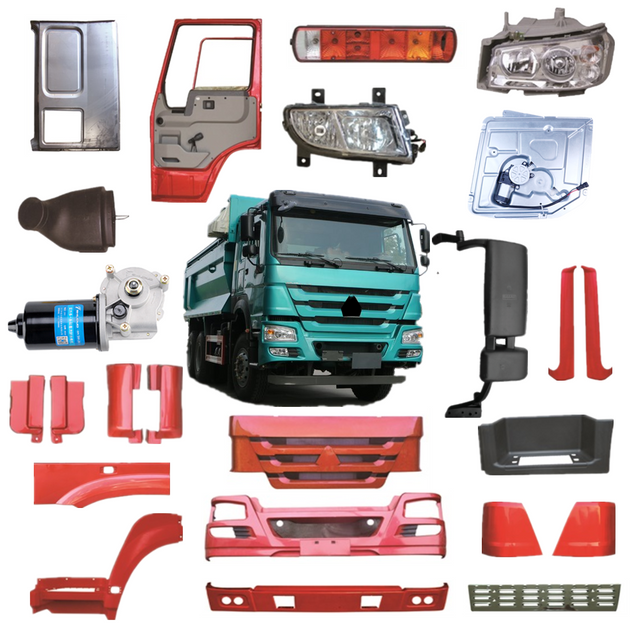
Find the Right HOWO Spare Parts for Your Truck
Looking for replacement parts for a HOWO A7, T5G, T7H, N7G, NX, MAX, or other HOWO truck model? Send YIBO your truck model, OEM or part number, product photo, and required quantity. Our team can help identify suitable replacement parts and provide a quotation.
Howo trucks face common issues from wear and heavy use. Choosing the right Truck Parts helps prevent failure, improve safety, and reduce downtime. Yibo offers reliable parts, stable quality, and strong supply support, helping users maintain performance and extend service life.
Common HOWO truck problems include brake wear, clutch slipping, engine overheating, electrical faults, steering and suspension wear, oil or coolant leakage, and hydraulic cab lifting problems. Regular inspection can help identify these issues before they cause major breakdowns.
HOWO truck overheating may be caused by a blocked radiator, coolant leakage, damaged hoses, a failing water pump, or other cooling system problems. Check the cooling system as soon as the engine temperature becomes abnormal.
Loss of power can be related to clogged air or fuel filters, fuel injection problems, restricted airflow, or engine component wear. Diagnosing the cause early can prevent further engine damage.
Clutch slipping is commonly associated with worn clutch components or problems within the clutch control system. If engine speed increases without a corresponding increase in vehicle speed, the clutch system should be inspected.
Confirm the truck model, part number, installation position, and required specifications before ordering. Providing photos or the original part number can also help a HOWO truck parts supplier identify the correct replacement.
Brake components, clutch parts, filters, cooling system parts, lights, mirrors, steering and suspension components, seals, hoses, and hydraulic parts should be checked regularly according to vehicle condition and operating environment.


